Why AC Capacitors Fail More Often During DFW Heat Waves
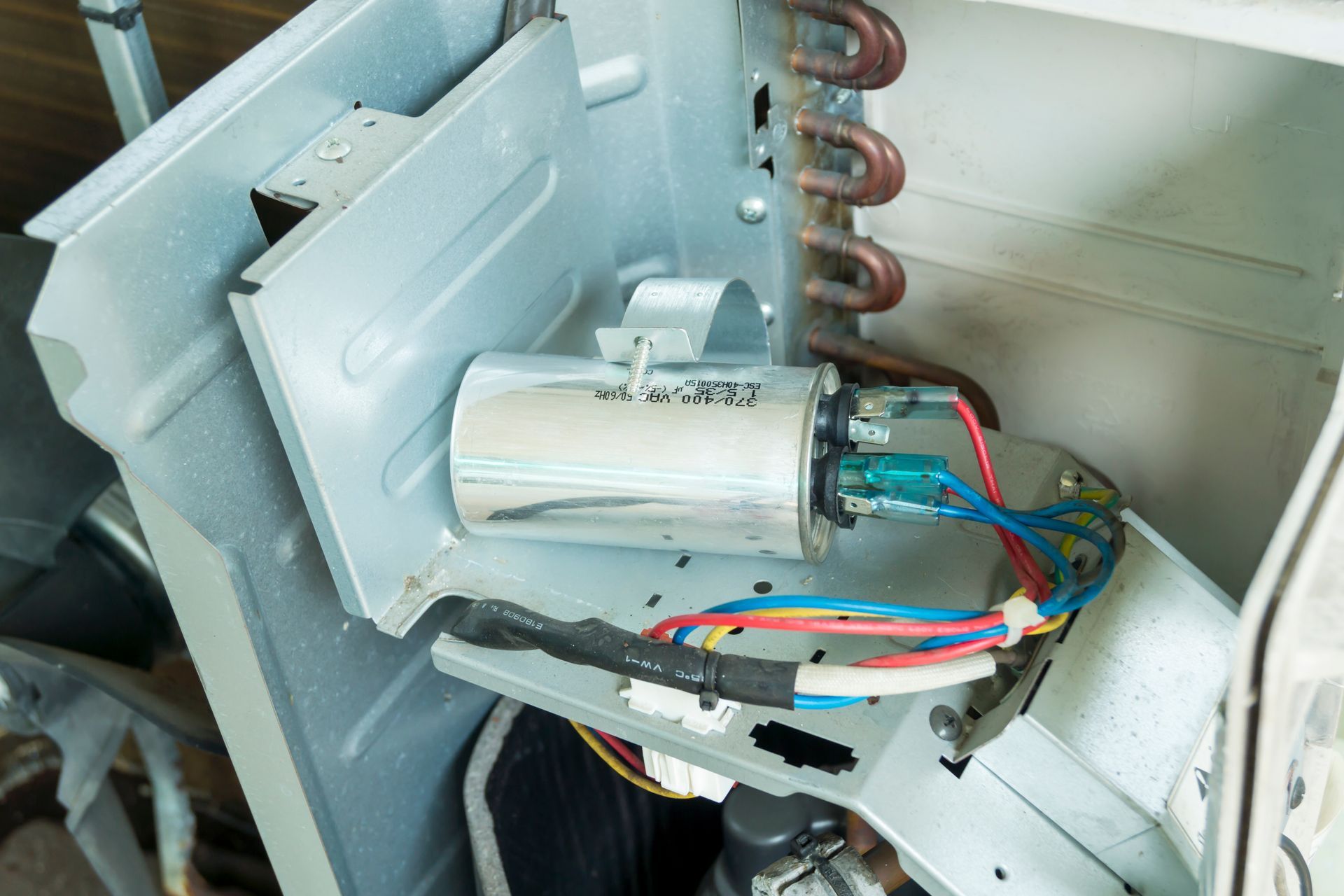
Capacitors are responsible for providing the electrical boost needed to start and run key components like the compressor and outdoor fan motor.
Like most mechanical and electrical components, capacitors wear out over time. During periods of extreme heat, when air conditioners run longer and work harder than usual, an already weakened capacitor may finally fail.
Signs Your AC Capacitor May Be Failing
Because the capacitor helps start major components inside your air conditioning system, problems often become noticeable when the system attempts to turn on. Common warning signs include:
- The outdoor unit hums or buzzes but the fan doesn’t start spinning
- The indoor unit blows warm air from your vents
- The system struggles to start or starts intermittently
- The air conditioner shuts off unexpectedly during operation
Some homeowners notice these symptoms gradually over several days, while others experience what seems like a sudden breakdown during the hottest afternoon of the year.
Although these symptoms frequently point to a failing capacitor, they can also indicate other electrical or mechanical problems. The only way to know for sure is with a professional inspection.
Why Heat Waves Push Weak Capacitors Over the Edge
Heat waves usually do not break a healthy capacitor, but they can stress a capacitor that was already getting weak. During extreme DFW heat, the AC runs longer, starts under more strain and operates in hotter conditions. A capacitor near the end of its life may no longer be able to keep up with that demand.
Capacitor failure is one reason HVAC companies get so busy during DFW heat waves, and why it can be tough to find a technician who can respond quickly when your AC goes out.
The good news is that if a failed capacitor is the only issue, it's usually one of the more straightforward AC repairs. Although there are several types of capacitors used in modern HVAC systems, they are common replacement parts, and technicians often have them in their truck or a nearby warehouse. Many capacitor replacement jobs can be completed during the initial visit or the same day.
When It Could Be More Than a Failed Capacitor
While capacitors are one of the more common causes of a non-functioning outdoor unit, they are far from the only possibility.
Similar symptoms can also result from:
- Compressor problems
- Condenser fan motor failures
- Faulty contactors
- Wiring issues
- Other electrical component failures
Replacing a capacitor without confirming the underlying cause may not solve the problem and could result in unnecessary repairs. A thorough diagnosis helps identify the actual source of the issue before any parts are replaced.
What You Should and Shouldn't Do
If your air conditioner suddenly stops working during hot weather, a few simple steps can help prevent additional problems while you wait for service.
Do:
- Verify your thermostat is calling for cooling
- Check your air filter and replace it if it is excessively dirty
- Turn the system off if it repeatedly struggles to start
- Schedule professional service if the problem continues
Don't:
- Keep resetting the circuit breaker if it continues tripping
- Repeatedly raise and lower the thermostat, hoping the system will eventually start
- Attempt to replace the capacitor yourself
Even after power has been disconnected, HVAC capacitors can retain a dangerous electrical charge. Diagnosing and replacing them safely requires the right training and equipment.
Our Arlington AC Repair Professionals Will Get Your System Running Again
If your air conditioner is humming, struggling to start, blowing warm air or showing other signs of a failing capacitor, Tom's Mechanical can identify the cause and recommend the appropriate repair.
Our technicians live in Arlington and Fort Worth too, and they know how unpleasant AC breakdowns make summer days and nights. That’s why they work fast and efficiently to accurately diagnose the problem and recommend the repair that will get your system running reliably again.
Call us at 817-277-4493 to schedule an inspection or request 24/7 emergency service.
OTHER RECENT POSTS