Why Does Air From Some AC Vents Feel Weaker or Warmer Than Others?
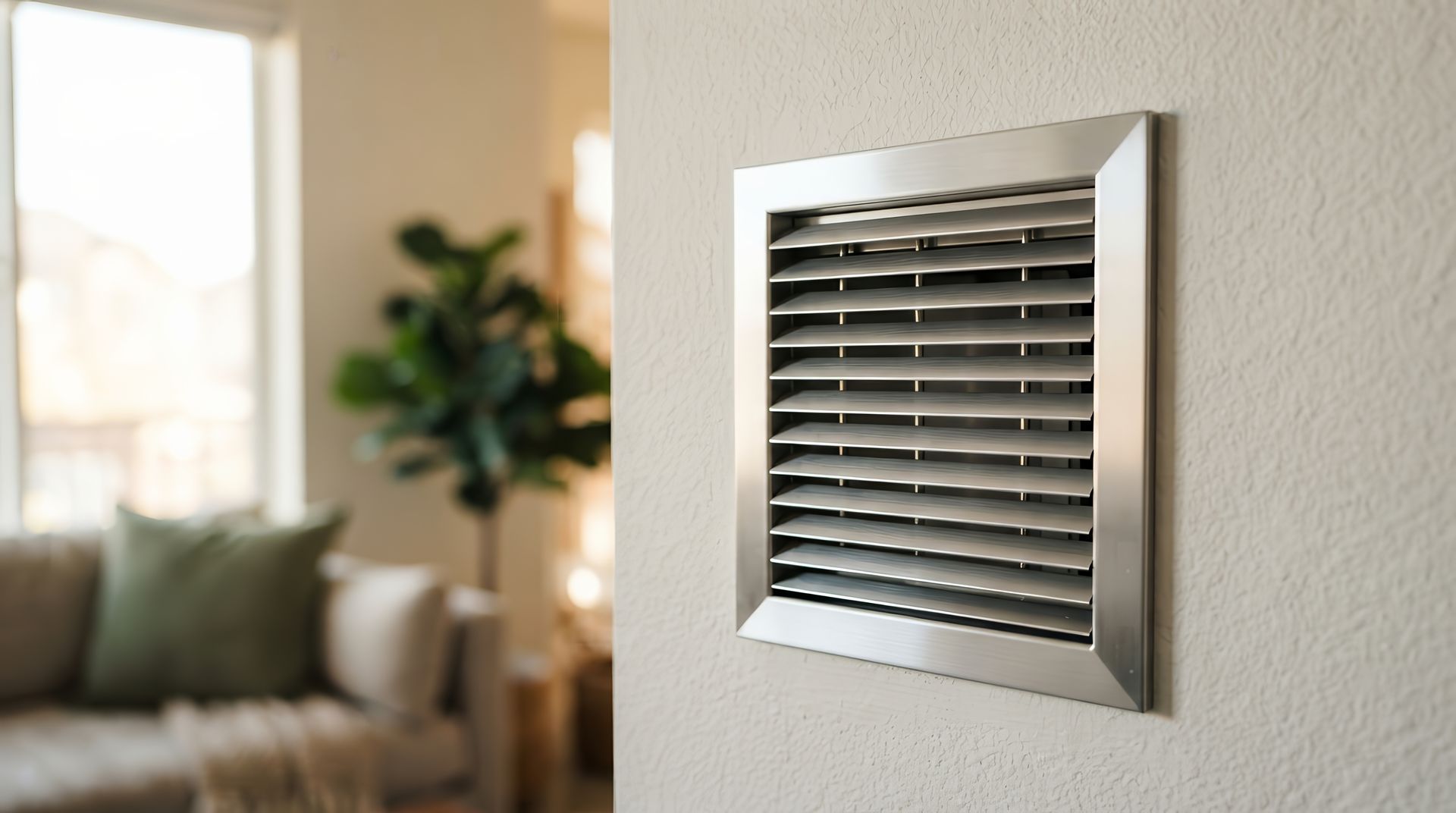
If one vent in your home seems to deliver strong, cold air while another feels noticeably weaker or less cool, the difference does not necessarily mean your air conditioner is failing.
Some variation between vents is normal. Air traveling through longer duct runs can lose pressure and gain a small amount of heat before it reaches the room, especially when the ductwork passes through a hot attic.
A well-designed system should keep those differences within a reasonable range, but every vent in the house will not necessarily deliver identical airflow or supply-air temperature.
Longer Duct Runs Can Reduce Airflow
The farther conditioned air has to travel, the more resistance it encounters along the way.
Rooms located close to the air handler may receive stronger airflow simply because the duct run is shorter and more direct. A room on the opposite side of the house may be served by a much longer branch that has to carry air farther before it reaches the register.
That does not automatically indicate a problem, but very long or undersized duct runs can make the difference more noticeable.
Bends, Kinks and Restrictions Can Slow Air Down
Ductwork rarely travels in a perfectly straight line. Anything that adds resistance along the route can reduce the amount of air that ultimately reaches the vent. Common restrictions include:
- Sharp bends and elbows
- Kinked or compressed flexible duct
- Sagging or poorly supported duct runs
- Partially closed dampers
- Partially closed or obstructed registers
In these situations, the air coming from the vent may still be properly cooled, but there is less of it. That lower volume can make the vent feel warmer or less effective even when the actual supply-air temperature has changed very little.
Duct Leaks Can Reduce Airflow Before It Reaches the Room
Loose connections, damaged sections and deteriorated seals can allow conditioned air to escape before it reaches the register.
If the leak is affecting one particular duct branch, the room at the end of that run may receive much less airflow than nearby rooms. In an Arlington or Fort Worth home with ductwork running through the attic, that lost conditioned air may simply be cooling an unconditioned space instead of the room it was intended to serve.
Poor Duct Insulation Can Make the Air Warmer
Airflow is not the only reason one vent may feel warmer than another.
Supply ducts running through attics are surrounded by air that can be far hotter than the conditioned air inside the duct. Insulation slows that heat transfer, but damaged, thin or missing insulation can allow the air inside to warm before it reaches the room.
Longer duct runs are exposed to those conditions for more time, so temperature differences may be more noticeable at vents located farther from the HVAC equipment.
Duct Design and Balancing Affect How Much Air Each Room Receives
The duct system is designed to distribute a certain amount of airflow to different parts of the house. Branch size, layout, damper settings and the amount of airflow assigned to each room all affect what comes out of individual vents.
Problems can become more obvious after remodeling, additions or changes in how rooms are used. A space that now has more windows, more occupants or more heat-producing equipment may need more conditioned air than the original duct design was intended to provide.
In some cases, improving comfort may require balancing or modifying the duct system rather than replacing the AC equipment.
When a Difference Between Vents Is Worth Investigating
Some variation is normal, but a noticeable change in airflow or supply-air temperature is worth paying attention to, especially if one room has become harder to cool than it used to be.
Tom’s Mechanical can evaluate your AC system, airflow and ductwork to determine whether the problem is related to equipment performance, duct design, leakage or another airflow issue. Call (817) 277-4493 to schedule HVAC service in Arlington, Fort Worth or the surrounding DFW area.
OTHER RECENT POSTS